Wake-up call: Pennsylvania elected officials stealing us blind
When are the citizens of Pennsylvania going to wise up and realize that their elected representatives are stealing them blind? This is not a partisan problem. Both Republicans and Democrats are guilty.
Effective Dec. 1, our Harrisburg Democrat and Republican hogs started receiving a cost-of-living raise in excess of a minimum of $2,152 per person. It is granted to them yearly without question.
We are told that even though the state government is in deficit these raises must go through. They can't be stopped because it is law.
It is shameless in these times when their constituents are losing jobs and the economy is approaching bottom that these entitled swine have no qualms of filling their pockets.
How can they with all their perks and benefits look a struggling family, a single parent or senior living on Social Security, in the face? They need a wake-up call. People are living day-to-day with great uncertainty and worriment of how they are going to make it. As the hogs are gorging themselves at their holiday parties at our expense, I can hear the echoes of "Let them eat cake" abounding.
State Rep. Rep. Barbara McIlvanie Smith (D-156) is supposed to introduce a bill calling for the recall of this COLA law when the Legislature comes back in 2009.
I urge all Pennsylvania newspapers to follow the introduction of this bill and all Pennsylvania citizens to contact their elected representatives and tell them to support it.
Let us let the entitled elitists know we are not cake-eating peasants. Begin to read and vote the person not the party.
BILL MADARA
Gilbertsville
Showing posts with label Spending. Show all posts
Showing posts with label Spending. Show all posts
Wednesday, December 10, 2008
A wake-up call for Pa. taxpayers
I like this letter originally published in The Pottstown Mercury from a Montgomery County resident who believes the recent COLA pay increase for state officials is the latest example of "public servants" fleecing taxpayers.


Tuesday, December 02, 2008
Can't anyone balance a budget?
.JPG)
According to Gov. Ed Rendell, chairman of the National Governors Association, 41 of the 50 states face serious budget deficits.
The governors of 40 states met today in Philadelphia with President-elect Barack Obama to push for federal funding of $136 billion worth of infrastructure projects.
Where will the money come from? Don't count on those Obama tax cuts he promised before the election. In fact, you might be paying more in taxes next year. I guess that's what Obama meant by change. You'll have less change in your pocket.
Governor Rendell Hosts Meeting of Nation's Governors With President-Elect Barack Obama
Monday, December 01, 2008
PA budget deficit at $658 million
Gov. Ed Rendell must be running out of fingers to plug the leaks in the budget dike he and Pennsylvania legislators created this year.
Just five months into the current fiscal year, officials are reporting a $658 million deficit in the state's General Fund budget. If the current trend continues, the state would be facing a deficit of $2 billion by the end of the fiscal year.
Acting Revenue Secretary Stephen H. Stetler reported Monday that Pennsylvania collected $1.6 billion in General Fund revenue in November -- $93.1 million, or 5.4 percent, less than anticipated.
It is the fifth month in a row the state took in less than it spent.
Fiscal year-to-date General Fund collections total $9 billion, which is $657.9 million, or 6.8 percent, below estimate, according to Stetler.
"In light of the economic downturn that is affecting state revenues across the nation, Gov. Rendell asked staff to identify additional spending cuts on top of the $311 million identified in September," Budget Secretary Mary Soderberg said in a written statement, adding that Pennsylvania is weathering the "economic storm better than many states."
The tax revenue news is bad across the board.
From the monthly recap of tax revenues released by the Pennsylvania Department of Revenue:
Just five months into the current fiscal year, officials are reporting a $658 million deficit in the state's General Fund budget. If the current trend continues, the state would be facing a deficit of $2 billion by the end of the fiscal year.
Acting Revenue Secretary Stephen H. Stetler reported Monday that Pennsylvania collected $1.6 billion in General Fund revenue in November -- $93.1 million, or 5.4 percent, less than anticipated.
It is the fifth month in a row the state took in less than it spent.
Fiscal year-to-date General Fund collections total $9 billion, which is $657.9 million, or 6.8 percent, below estimate, according to Stetler.
"In light of the economic downturn that is affecting state revenues across the nation, Gov. Rendell asked staff to identify additional spending cuts on top of the $311 million identified in September," Budget Secretary Mary Soderberg said in a written statement, adding that Pennsylvania is weathering the "economic storm better than many states."
The tax revenue news is bad across the board.
From the monthly recap of tax revenues released by the Pennsylvania Department of Revenue:
Sales tax receipts totaled $648.3 million for November, $24.7 million below estimate. Sales tax collections, year-to-date, total $3.6 billion, which is $115.8 million, or 3.1 percent, less than anticipated.Republican lawmakers, including Mike Turzai, Curt Schroder and Sam Rohrer warned Rendell and their colleagues during the budget debate in June and July that the $28.3 billion General Fund budget would lead to massive deficits.
Personal income tax (PIT) revenue in November was $765.1 million, $4.2 million below estimate. This brings year-to-date PIT collections to $3.8 billion, which is $76.6 million, or 2 percent, below estimate.
November corporation tax revenue of $51.2 million was $28.6 million below estimate. Year-to-date corporation tax collections total $815.7 million, which is $149.5 million, or 15.5 percent, below estimate.
Other General Fund revenue figures for the month included $60.3 million in inheritance tax, $1.8 million below estimate, bringing the year-to-date total to $330.6 million, which is $24.3 million below estimate.
Realty transfer tax was $24.3 million for November, $4.3 million below estimate, bringing the total to $157.2 million for the year, which is $27.7 million less than anticipated.
Other General Fund tax revenue including cigarette, malt beverage and liquor taxes totaled $93.7 million for the month, $2 million below estimate, bringing the year-to-date total to $443.7 million, which is $10.8 million below estimate.
Non-tax revenue totaled -$2.1 million for the month, $27.6 million below estimate, bringing the year-to-date total to -$124 million, which is $253.3 million below estimate.
In addition to the General Fund collections, the Motor License Fund received $256.9 million for the month, $43.2 million below estimate. Fiscal year-to-date collections for the fund total $1 billion, which is $112.5 million, or 9.8 percent, below estimate.
Tuesday, November 18, 2008
Send a copy to Ed Rendell
The Wall Street Journal has published an excellent op-ed column by Steve Malanga, a senior editor at the Manhattan Institute's City Journal, about how states got themselves into a fiscal mess.
Are you listening, Ed Rendell?
Pennsylvania has run up a budget deficit of $565 million just four months into the current fiscal year. State lawmakers predict a deficit of $2.5 billion by the end of the fiscal year.
How did we get into this mess? When times were good, Gov. Rendell proposed budgets that increased spending at twice the rate of inflation. Since Rendell took office in 2003, state spending has risen by more than $7 billion. Rendell also borrowed another $3 billion.
Now that times are tough, tax revenues are shrinking dramatically. Rendell has proposed $300 million in cuts from administrative spending, but that won't put much of a dent in a $2.5 billion deficit.
Rendell isn't alone in screwing up his state's bottom line.
From Malanga's column:
Are you listening, Ed Rendell?
Pennsylvania has run up a budget deficit of $565 million just four months into the current fiscal year. State lawmakers predict a deficit of $2.5 billion by the end of the fiscal year.
How did we get into this mess? When times were good, Gov. Rendell proposed budgets that increased spending at twice the rate of inflation. Since Rendell took office in 2003, state spending has risen by more than $7 billion. Rendell also borrowed another $3 billion.
Now that times are tough, tax revenues are shrinking dramatically. Rendell has proposed $300 million in cuts from administrative spending, but that won't put much of a dent in a $2.5 billion deficit.
Rendell isn't alone in screwing up his state's bottom line.
From Malanga's column:
From the end of the last recession in 2003 until this year, states collectively boosted general-fund budgets by an annual average of some 6.4%. In just 2006 and 2007 alone they added about $100 billion. During the period from 2003-2008, states also took on 38% more debt, increasing their collective indebtedness to $2.19 trillion.To read the full article, visit the newspaper's Web site.
Now it's cold-shower time. Earlier this year, in the spring, more than half of the states grappled with budget deficits amounting collectively to nearly $50 billion. Since then tax collections have fallen short of projections, producing further midyear budget holes in nearly two dozen states.
Monday, November 17, 2008
We want our money back!
 Americans for Tax Reform President Grover Norquist sent a letter to the U.S. Treasury Department today requesting the full $700 billion in bailout money be turned over to him.
He's got better plans for the money than what Congress has come up with so far.
From Norquist's letter:
I write today to formally request $700 billion from the TARP Capital Purchase Program. Since unionized auto companies, state and local governments, and certain credit card companies are applying, I thought I should, as well. Attached you will find the two-page application which I downloaded from www.treas.gov.That is the most sensible plan I've heard for how to use the $700 billion bailout plan. Sign me up, too, Grover.
I am fully aware that some $125 billion has already been allocated as of October 29, 2008. However, given that the federal government has the full weight of the army, the FBI, etc. behind it, I am confident that you can re-appropriate this money from the likes of Wells Fargo (or their successor companies, if the current over-regulatory and over-taxing economic climate has caused them to go under).
I have a plan for this $700 billion which should be just what's needed to get the American economy going. Since the money came from the taxpayers in the first place, I propose giving it back to them.
Norquist Sends Letter to Treasury Applying for $700 Billion in TARP Funds
Thursday, November 13, 2008
Lawmaker blames deficit on Rendell overspending
 State Rep. Curt Schroder, R-Chester County, has an op-ed column in The West Chester Daily Local News on Pennsylvania's growing budget deficit, which has passed the $550 million mark in the first four months of the current fiscal year.
Schroder, who voted against Rendell's $28.3 billion budget, says the red ink is not caused by "the global economic meltdown" as Rendell claims, but by a pattern of overspending on the part of the Democratic governor.
From Schroder's column:
Pennsylvania's budget deficit, which analysts predict could reach as high as $2.5 billion by the end of the current fiscal year, was not created solely by the economic downturn as some would have you believe. Instead, it is the result of years of overspending in Harrisburg.Schroder says the token cuts Rendell has offered to make so far are not enough. The entire budget must be reopened or the state will face a huge financial crisis in 2009.
Gov. Ed Rendell's budgets have routinely increased spending beyond the rate of inflation. Now, to quote one controversial clergyman, "The chickens are coming home to roost!"
From 2002 to the current 2008-09 budget, spending increased by 38.6 percent while the rate of inflation only rose by 19.5 percent.
From his column:
This entire budget, and the house of cards on which it is based, must be reopened. It needs to be re-examined from top to bottom by the General Assembly - the elected body of the taxpaying citizens of Pennsylvania.Read the full column, "Blames deficit on overspending," at the newspaper's Web site.
There is no shortage of ideas worth exploring. We should use this opportunity to force some tough decisions and finally come to grips with unnecessary spending on programs that either don't work or only serve a narrow special interest. If we do not act now, Pennsylvania will face its own fiscal crisis of Wall Street proportions.
Friday, October 31, 2008
Guest Column: Pennsylvania's $400M Question
By Matthew J. Brouillette
How will you vote on Tuesday, November 4th?
No, I'm not talking about the race for the White House. Nor am I talking about the Congressional or state House and Senate races. I'm talking about the "Water and Sewer Improvements Bond Referendum."
I know, I know, it's not the kind of election stuff you find on the front page of newspapers, but how you vote will determine whether or not you will put your children and my children further into debt.
Right now, the average citizen in Pennsylvania has a state and local government debt burden of nearly $9,000. But our politicians in Harrisburg want to add more to the $110 billion you already owe. $400 million more.
Here's the question you'll see on the ballot:
Do you favor the incurring of indebtedness by the Commonwealth of $400,000,000 for grants and loans to municipalities and public utilities for the cost of all labor, materials, necessary operational machinery and equipment, lands, property, rights and easements, plans and specifications, surveys, estimates of costs and revenues, prefeasibility studies, engineering and legal services and all other expenses necessary or incident to the acquisition, construction, improvement, expansion, extension, repair or rehabilitation of all or part of drinking water system, storm water, nonpoint source projects, nutrient credits and wastewater treatment system projects?
Most likely, voters will overwhelmingly approve this measure, just as they have in the past. Whether it was the $625 million for Growing Greener II in 2005 or the $20 million bond issue to compensate Persian Gulf veterans in 2006, voters don't seem to have much trouble allowing lawmakers to put us further into debt.
Of course, Governor Rendell and the General Assembly are OK with asking you for approval of more spending on questions like "Do you want clean water?" or "Do you support the troops?" Who can vote against those things?
But those same politicians never ask you if we want to go into massive bonded debt to pay $45 million for a soccer stadium in Chester, $35 million for a baseball stadium in Lackawanna County, $250 million for a cargo airport in Hazle Township, $12.5 million for a 200-room lodge in Tioga County, or a slew of other pork barrel projects. They just do it, like they did to pay for these projects last July — when they borrowed over $3 billion on the taxpayers’ credit card.
Citizens should rightly wonder why they are not given the opportunity to vote "YES" or "NO" on bonded debt for corporate welfare and other pork barrel projects, and are only asked about bonds for municipal water and sewer projects — a generally accepted responsibility of government. Politicians don't ask because they already know the answer to the former and they can pass the buck on the latter.
You should also know that there’s some fine print that doesn't appear at the bottom of the ballot question. That $400 million debt is really closer to $621 million. Just like any other loan, taxpayers will have to pay back both the principal and the interest over a 20-year period for this new bonded debt.
Our calculations at the Commonwealth Foundation suggest that — after all the debt is issued ($11.2 million and $23.1 million in 2009-10 and 2010-11, respectively) — the annual taxpayer costs for the next two decades for just this ballot issue will be approximately $31 million.
For the average family of four in Pennsylvania, their share will be another $130 in new debt payments which will be paid back with General Fund revenues (i.e. state income, sales, and business taxes). That may not sound like a lot, but when you add in the debt service for the other $110 billion in outstanding debt we're beginning to talk about some real money. Furthermore, given that Pennsylvania is already facing a budget shortfall — some lawmakers estimate it to be as high as $3 billion by the fiscal year’s end — is now really the time to be adding another mandated cost to the taxpayers?
So how will you vote on November 4th? It is unfortunate that you didn't get to vote on the billions in pork-barrel debt you've already been strapped with, but next Tuesday you will get to decide if you can afford another spending program. For you, that's the $400 million question.
Matthew J. Brouillette is president and CEO of the Commonwealth Foundation (www.CommonwealthFoundation.org), a public policy research and educational institute located in Harrisburg.
How will you vote on Tuesday, November 4th?
No, I'm not talking about the race for the White House. Nor am I talking about the Congressional or state House and Senate races. I'm talking about the "Water and Sewer Improvements Bond Referendum."
I know, I know, it's not the kind of election stuff you find on the front page of newspapers, but how you vote will determine whether or not you will put your children and my children further into debt.
Right now, the average citizen in Pennsylvania has a state and local government debt burden of nearly $9,000. But our politicians in Harrisburg want to add more to the $110 billion you already owe. $400 million more.
Here's the question you'll see on the ballot:
Do you favor the incurring of indebtedness by the Commonwealth of $400,000,000 for grants and loans to municipalities and public utilities for the cost of all labor, materials, necessary operational machinery and equipment, lands, property, rights and easements, plans and specifications, surveys, estimates of costs and revenues, prefeasibility studies, engineering and legal services and all other expenses necessary or incident to the acquisition, construction, improvement, expansion, extension, repair or rehabilitation of all or part of drinking water system, storm water, nonpoint source projects, nutrient credits and wastewater treatment system projects?
Most likely, voters will overwhelmingly approve this measure, just as they have in the past. Whether it was the $625 million for Growing Greener II in 2005 or the $20 million bond issue to compensate Persian Gulf veterans in 2006, voters don't seem to have much trouble allowing lawmakers to put us further into debt.
Of course, Governor Rendell and the General Assembly are OK with asking you for approval of more spending on questions like "Do you want clean water?" or "Do you support the troops?" Who can vote against those things?
But those same politicians never ask you if we want to go into massive bonded debt to pay $45 million for a soccer stadium in Chester, $35 million for a baseball stadium in Lackawanna County, $250 million for a cargo airport in Hazle Township, $12.5 million for a 200-room lodge in Tioga County, or a slew of other pork barrel projects. They just do it, like they did to pay for these projects last July — when they borrowed over $3 billion on the taxpayers’ credit card.
Citizens should rightly wonder why they are not given the opportunity to vote "YES" or "NO" on bonded debt for corporate welfare and other pork barrel projects, and are only asked about bonds for municipal water and sewer projects — a generally accepted responsibility of government. Politicians don't ask because they already know the answer to the former and they can pass the buck on the latter.
You should also know that there’s some fine print that doesn't appear at the bottom of the ballot question. That $400 million debt is really closer to $621 million. Just like any other loan, taxpayers will have to pay back both the principal and the interest over a 20-year period for this new bonded debt.
Our calculations at the Commonwealth Foundation suggest that — after all the debt is issued ($11.2 million and $23.1 million in 2009-10 and 2010-11, respectively) — the annual taxpayer costs for the next two decades for just this ballot issue will be approximately $31 million.
For the average family of four in Pennsylvania, their share will be another $130 in new debt payments which will be paid back with General Fund revenues (i.e. state income, sales, and business taxes). That may not sound like a lot, but when you add in the debt service for the other $110 billion in outstanding debt we're beginning to talk about some real money. Furthermore, given that Pennsylvania is already facing a budget shortfall — some lawmakers estimate it to be as high as $3 billion by the fiscal year’s end — is now really the time to be adding another mandated cost to the taxpayers?
So how will you vote on November 4th? It is unfortunate that you didn't get to vote on the billions in pork-barrel debt you've already been strapped with, but next Tuesday you will get to decide if you can afford another spending program. For you, that's the $400 million question.
Matthew J. Brouillette is president and CEO of the Commonwealth Foundation (www.CommonwealthFoundation.org), a public policy research and educational institute located in Harrisburg.
Tuesday, October 28, 2008
Newspaper: Vote NO on bond referendum
The Pittsburgh Tribune-Review is urging Pennsylvania voters to reject a request by the Rendell Administration to borrow $400 million for water and sewer projects.
From an editorial in today's edition:
I also recommend a NO vote to send a message to Harrisburg that elected officials have to start living within their means.
From an editorial in today's edition:
The language of the referendum is too vague. And its proceeds are ripe for political machinations. The money is tied to no specific project. What's to prevent Gov. Ed Rendell or legislative friends of the nearly half-billion dollars in new borrowing to direct this money to pet "economic development" projects in, say, the Poconos?Read the full editorial at the newspaper's Web site.
So, we're "against" infrastructure help, right? Wrong. It's just that there are better ways to finance these vital upgrades without yet again diving into the taxpayers' pockets so deep that the soles of their feet are cut.
Government-types are delusional if they don't think there's $400 million in state budget waste. And what about all that glorious be-all and end-all money from slots machines?
I also recommend a NO vote to send a message to Harrisburg that elected officials have to start living within their means.
Monday, October 27, 2008
Say 'NO' more debt for PA
The Letter to the Editor below was originally published in The Mercury. The Montgomery County writer urges fellow Pennsylvania residents to carefully consider whether they want to give Gov. Ed Rendell more money to spend by approving a referendum question on Nov. 4 to allow the stat to borrow $400 million for water/sewer projects.
Since Rendell took office in 2003, the General Fund budget has risen by $7 billion and state borrowing has increased by another $3 billion. Rendell wants more money to hand out. I say NO!
Since Rendell took office in 2003, the General Fund budget has risen by $7 billion and state borrowing has increased by another $3 billion. Rendell wants more money to hand out. I say NO!
Should Pa. go deeper in debt?
When you enter the voting booth on Nov. 4, you will not only be selecting leaders but also asked to say “yes” or “no” to a $400 million indebtedness. If approved, the money will be used to support water and sewage systems assistance in Pennsylvania. This referendum is no different than most in the past as it is poorly advertised and catches voters at a vulnerable time in the voting booth.
At present, there are approximately 2,000 drinking water systems in Pennsylvania and about 1,000 waste water systems. It is estimated that it would take in excess of $18 billion to bring all these systems up to par, so the $400 million is only a drop in the bucket (no pun intended).
At the federal level, there has been much discussion on funding the entire U.S. infrastructure as it would certainly provide lots of jobs and help jump start a sagging economy.
The state budget, passed only weeks ago, is already showing signs of program cuts and eliminations due to projected deficits in income next year. We need to give careful consideration to this question as most assuredly we need help with this infrastructure, but is it time to just put on a Band-aid?
BOB SASSAMAN
Pottstown
Wednesday, October 22, 2008
Vote NO on Water/Sewer Referendum
Pennsylvania voters will be asked Nov. 4 to approve $400 million in new borrowing for water and sewer infrastructure projects.
I'm voting NO on the referendum question and urge my fellow Pennsylvanians to do likewise.
The well has run dry for Gov. Ed Rendell. He has increased state spending my more than $7 billion since taking office in 2003. He has increased state debt by another $3 billion.
It's time to take away his credit card.
There are probably many worthwhile projects that need to be funded in Pennsylvania, but Gov. Ed Rendell and the free-spending state Legislature have squandered their credibility on spending issues. I don't trust Rendell or the Legislature with my money. I will not support handing the Harrisburg bunch another $400 million.
Joe Hilliard, writing at The Lehigh Valley Political Blog, has similar sentiments:
I'm voting NO on the referendum question and urge my fellow Pennsylvanians to do likewise.
The well has run dry for Gov. Ed Rendell. He has increased state spending my more than $7 billion since taking office in 2003. He has increased state debt by another $3 billion.
It's time to take away his credit card.
There are probably many worthwhile projects that need to be funded in Pennsylvania, but Gov. Ed Rendell and the free-spending state Legislature have squandered their credibility on spending issues. I don't trust Rendell or the Legislature with my money. I will not support handing the Harrisburg bunch another $400 million.
Joe Hilliard, writing at The Lehigh Valley Political Blog, has similar sentiments:
Government is out of control. At all levels. And it is both parties that have contributed to the explosion of spending and debt at all levels of government. Politicians fund deficit spending with borrowed money, which will have to be repaid sometime. And for any debt incurred, double the cost to reflect the repayment obligations. Think the sub-prime mortgage market created a financial disaster? Wait till all levels of government collapse and can not borrow or borrowing costs explode. We are living beyond our means. We can either accept our responsibility to future generations and ease off our living on credit cards. Or we can keep maxing out our plastic until the bills MUST be paid and suffer grave consequences.Read Hilliard's full analysis "What's another $400 million?" at The Lehigh Valley Political Blog.
Wednesday, October 08, 2008
Columnist: Bloated PA budget needs a butcher
The chickens have come home to roost after six five years of runaway spending by Gov. Ed Rendell.
Pennsylvania is facing a budget deficit of up to $2.5 billion or more.
State spending has increased $8 billion since Rendell came to Harrisburg in 2003 and that's not counting the $3 billion in debt Rendell pushed through the doormat state Legislature.
Rendell and legislative leaders say they can't find any fat to trim from $28.3 billion General Fund budget for the 2008-09 fiscal year.
Columnist Eric Heyl, writing in The Pittsburgh Tribune-Review, doesn't have a problem finding places to cut.
From Heyl's column:
Pennsylvania is facing a budget deficit of up to $2.5 billion or more.
State spending has increased $8 billion since Rendell came to Harrisburg in 2003 and that's not counting the $3 billion in debt Rendell pushed through the doormat state Legislature.
Rendell and legislative leaders say they can't find any fat to trim from $28.3 billion General Fund budget for the 2008-09 fiscal year.
Columnist Eric Heyl, writing in The Pittsburgh Tribune-Review, doesn't have a problem finding places to cut.
From Heyl's column:
Pennsylvania taxpayers are spending $192 million this year to operate the state House and $102 million on the Senate. An additional $38.4 million is being spent on legislative committees, commissions, bureaus and agencies.Read "Lean budget requires butcher" at the newspaper's Web site.
Add the numbers: $332.4 million.
That staggering sum is $43 million more than what was budgeted this year for all state health care programs. Yet our needlessly large, appallingly expensive and abhorrently clueless body of elected officials is stumped over what it could cut.
Monday, October 06, 2008
PA drowning in sea of red ink under Rendell
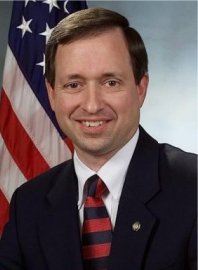 State Rep. Sam Rohrer, R-Berks, a frequent critic of massive state spending under Gov. Ed Rendell, says time is running out to re-open Pennsylvania's red-ink budget to avoid a potential tax increase next year.
With only three scheduled session days remaining before the Legislature takes another break to campaign for the November elections, Rohrer cited a recent Pennsylvania Revenue Department report that shows September revenue collections were $160 million lower than anticipated. It was the third straight month the state spent more than it took in and there are still nine months to go in the current fiscal year.
The red ink means the governor and Legislature must re-open the $28.3 billion General Fund budget for 2008-09, Rohrer says.
"When I called for a zero-growth budget throughout the entire budget negotiations, and again when I called for the immediate re-opening of the out-of-balance budget just a few weeks ago, I did so based on the grounds that the out-of-control spending would need to be checked," Rohrer said in a written statement. "The recent release of September revenue collection numbers has confirmed my arguments for no new taxes, no new spending and no new borrowing yet again."
Rohrer said the state budget signed by Gov. Rendell is "effectively unconstitutional" because it "deliberately ignored clear economic predictions about the level of revenue that would be available to the Commonwealth."
Rohrer said he is not surprised by the September numbers "and neither should any of my colleagues or the governor."
Rohrer also said that tapping into the state's Rainy Day Fund to address any future budget deficit is illegal because the budget crisis was anticipated by state officials.
"Under these circumstances, draining the Rainy Day Fund is not an option," Rohrer said. "This fund is clearly reserved for unanticipated emergencies. If the governor continues to spend recklessly, we will certainly have an ever larger fiscal emergency on our hands, but it certainly will not be unanticipated."
The Associated Press reports that Pennsylvania is now facing a budgetary shortfall of up to $1.3 billion. Some lawmakers project a $2.5 billion deficit by 2010, which also happens to be Rendell's last year in office.
State spending has increased by nearly $8 billion since Rendell became governor in 2003.
Rohrer said Rendell's recent call for a hiring freeze, ban on out-of-state travel and reduced spending by state agencies is not enough.
"Now it is beyond absolutely clear that Gov. Rendell's arbitrary cost cutting in several departments was inadequate and short-sighted," Rohrer said. "Now is definitely the time for drastic spending reductions, rather than more lame duck excuses which will only lead to further inaction."
Rohrer said the state must re-open the budget and allow for legislative and public input to create a fiscally responsible, balanced, zero-growth state budget.
"With ever-increasing fuel and food prices, not to mention Pennsylvania's unaddressed school property tax crisis, even considering raising taxes or borrowing against the tax dollars of future generations is absolutely unconscionable," Rohrer said.
Wednesday, October 01, 2008
Tuesday, September 30, 2008
Third month of red ink for Rendell budget
It's not looking any better for Gov. Ed Rendell's deficit budget for the 2008-09 fiscal year.
For the third month in a row, the state took in less than it spent.
The three-month deficit in Rendell's $28.3 billion budget now totals $281.4 million.
The Pennsylvania Department of Revenue today released its monthly revenue figures, showing Pennsylvania collected $2.3 billion in General Fund revenue in September, $163.8 million, or 6.5 percent, less than anticipated.
Fiscal year-to-date General Fund collections total $5.8 billion, which is $281.4 million, or 4.7 percent, below estimate, Revenue Secretary Tom Wolf said in a written statement.
"September is the first significant collections month of the fiscal year, as quarterly corporation tax and personal income tax estimated payments were due this month," Wolf said. "Pennsylvania has weathered the economic storm better than other states, but it's clear that the uncertainties in the national economy are affecting our tax collections in Pennsylvania."
Earlier this month, Gov. Rendell ordered a hiring freeze and a ban on out-of-state travel and instructed most state agencies to reduce spending by 4.25 percent to save about $200 million.
But those savings won't even cover the $281.4 million running deficit and there are still nine more months to go in the fiscal year. Republican lawmakers want to re-open the $28.3 billion budget to find more places to cut.
Can somebody bail out Pennsylvania?
Here are the revenue totals released today by the state:
For the third month in a row, the state took in less than it spent.
The three-month deficit in Rendell's $28.3 billion budget now totals $281.4 million.
The Pennsylvania Department of Revenue today released its monthly revenue figures, showing Pennsylvania collected $2.3 billion in General Fund revenue in September, $163.8 million, or 6.5 percent, less than anticipated.
Fiscal year-to-date General Fund collections total $5.8 billion, which is $281.4 million, or 4.7 percent, below estimate, Revenue Secretary Tom Wolf said in a written statement.
"September is the first significant collections month of the fiscal year, as quarterly corporation tax and personal income tax estimated payments were due this month," Wolf said. "Pennsylvania has weathered the economic storm better than other states, but it's clear that the uncertainties in the national economy are affecting our tax collections in Pennsylvania."
Earlier this month, Gov. Rendell ordered a hiring freeze and a ban on out-of-state travel and instructed most state agencies to reduce spending by 4.25 percent to save about $200 million.
But those savings won't even cover the $281.4 million running deficit and there are still nine more months to go in the fiscal year. Republican lawmakers want to re-open the $28.3 billion budget to find more places to cut.
Can somebody bail out Pennsylvania?
Here are the revenue totals released today by the state:
Sales tax receipts totaled $688.3 million for September, $33.3 million below estimate. Sales tax collections year-to-date total $2.2 billion, which is $61.1 million, or 2.7 percent, less than anticipated.
Personal income tax (PIT) revenue in September was $954 million, $50.9 million below estimate. This brings year-to-date PIT collections to $2.4 billion, which is $58.2 million, or 2.4 percent, below estimate.
September corporation tax revenue of $502.1 million was $42.7 million below estimate. Year-to-date corporation tax collections total $629.6 million, which is $61.8 million, or 8.9 percent, below estimate.
Other General Fund revenue figures for the month included $62.6 million in inheritance tax, $3.9 million below estimate, bringing the year-to-date total to $203.6 million, which is $13.5 million below estimate.
Realty transfer tax was $31.5 million for September, bringing the total to $103.7 million for the year, which is $15.4 million less than anticipated.
Other General Fund revenue including the cigarette, malt beverage and liquor tax totaled $105.2 million for the month, $24.3 million below estimate, bringing the year-to-date total to $274.3 million, which is $71.3 million below estimate.
In addition to the General Fund collections, the Motor License Fund received $182.1 million for the month, $14 million below estimate. Fiscal year-to-date collections for the fund total $616.4 million, which is $50.1 million, or 7.5 percent, below estimate.
The Gaming Fund received $47.7 million in unrestricted revenues for September. Fiscal year-to-date collections for the fund total $150.3 million. Gaming Fund receipts include taxes, fees and interest. Of the total for the month, $47.2 million was collected in state taxes for property tax relief, bringing the year-to-date total to $149 million.
Other gaming-related revenues collected for September included $5.6 million for the Local Share Assessment, for a total of $13.4 million for the year; $6.9 million for the Economic Development and Tourism Fund, for a year-to-date total of $21.9 million; and $16.7 million for the Race Horse Development Fund, bringing the total for the year to $52.6 million.
Friday, September 26, 2008
Piling on more debt
The federal government wants to plunge American taxpayers deeper into debt with the $700 billion bailout of the financial community. On a smaller scale, Gov. Ed Rendell wants to send Pennsylvania deeper into debt with a $400 million plan to pay for water and sewer projects.
When Pennsylvania voters go to the polls on Nov. 4, they will be asked to approve a referendum authorizing Rendell to borrow $400 million to provide grants and loans to municipalities and public utilities for the water and sewer infrastructure projects.
I don't know about you, but I'll all tapped out. I'm voting "NO" on the referendum question.
State spending has increased by $8 billion since Gov. Rendell took office in 2003. And Rendell also increased the state debt by $3 billion. Where did the $8 billion go? I know that at least $1 billion went for no-bid contracts Rendell awarded to political cronies. As for the rest, it's anyone's guess.
I do know Rendell included $800 million in spending for water and sewer projects in his $28.3 billion General Fund budget this year, but that budget is hemorrhaging red ink and the state could end up facing a $1 billion deficit by the end of the fiscal year.
Rendell spent an entire week on a bus this summer stopping at various places across the state to hand out hundreds of millions of dollars in giant checks to various public and private interests. He's addicted to spending other people's money.
I'm tired of Rendell spending my money. I'm voting "NO" on the referendum question on Nov. 4 and I urge my fellow Pennsylvanians to do likewise.
We have to draw a line in the sand. It looks like taxpayers won't get a say in the Wall Street bailout, but at least Pennsylvania voters can have a say in how much more debt the politicians pile on.
When Pennsylvania voters go to the polls on Nov. 4, they will be asked to approve a referendum authorizing Rendell to borrow $400 million to provide grants and loans to municipalities and public utilities for the water and sewer infrastructure projects.
I don't know about you, but I'll all tapped out. I'm voting "NO" on the referendum question.
State spending has increased by $8 billion since Gov. Rendell took office in 2003. And Rendell also increased the state debt by $3 billion. Where did the $8 billion go? I know that at least $1 billion went for no-bid contracts Rendell awarded to political cronies. As for the rest, it's anyone's guess.
I do know Rendell included $800 million in spending for water and sewer projects in his $28.3 billion General Fund budget this year, but that budget is hemorrhaging red ink and the state could end up facing a $1 billion deficit by the end of the fiscal year.
Rendell spent an entire week on a bus this summer stopping at various places across the state to hand out hundreds of millions of dollars in giant checks to various public and private interests. He's addicted to spending other people's money.
I'm tired of Rendell spending my money. I'm voting "NO" on the referendum question on Nov. 4 and I urge my fellow Pennsylvanians to do likewise.
We have to draw a line in the sand. It looks like taxpayers won't get a say in the Wall Street bailout, but at least Pennsylvania voters can have a say in how much more debt the politicians pile on.
Thursday, September 18, 2008
Lawmakers want to re-open Rendell's red-ink budget
 State Rep. Sam Rohrer (R-Berks), State Sen. John Eichelberger (R-Blair) and House Republican Policy Committee Chairman Mike Turzai (R-Allegheny) today called on Gov. Ed Rendell and the Legislature to re-open "and make substantial spending reductions" to balance the state's $28.3 billion 2008-09 General Fund budget.
The lawmakers were joined by Commonwealth Foundation President Matthew Brouillette and several other economic experts at a Harrisburg press conference.
Below a press release issued this afternoon by Rohrer:
"On July 4, 2008, I joined in the debate on the House floor against final passage of the 2008-09 state budget based on the following projections that were ultimately dismissed by Majority Leader DeWeese, House Majority Appropriations Chairman Dwight Evans and several others as premature and pessimistic:
1. The $28.3 billion spending plan that was approved by the General Assembly on Independence Day is effectively unconstitutional because it is demonstrably out of balance ignoring clear financial data and accurate economic forecasts.
2. This year's budget is problematic because it will predictably force the legislature to completely defund the Commonwealth's already largely depleted $740 million Rainy Day Fund next year with no justifiable emergency or fiscally responsible reason for doing so.
3. This year's budget is fiscally out of balance because without dispute the roughly 4 percent spending increase is more than twice the rate of actual revenue growth (1.7 percent) over the previous 12 months.
4. Spending in this year's budget is built on the extremely flawed assumption of nearly 4 percent economic growth over the next twelve months, when at best economic experts are predicting no more than 2 percent.
5. While there may be no broad-based new tax increases or fees in this year's budget, next year Pennsylvania taxpayers, at minimum, could be asked to foot the bill for a $600 to $900 million budgetary shortfall.
6. Even statements from Senate Democrat Appropriations staff and the Senate Republican Appropriations Committee Chairman place the deficit at between $800 million and $2 billion!
"Nearly 80 days later, a dramatic $117.5 million August 2008 revenue shortfall and an unprecedented, yet absolutely insufficient executive order from the governor for state agencies to reduce spending by just $200 million, absolutely nothing has changed about the projections I presented except they are now our state's rapidly approaching economic reality.
"With all due to respect to yesterday's pledge on the House floor from both the Democrat and Republican Appropriations chairmen to 'meet and monitor revenue levels on a monthly basis,' the time for talking is past. The time for action and specific spending reductions is now.
"Immediately re-opening the budget and realistically re-organizing our fiscal priorities is critical to allow both the legislature and the governor the ability to direct where these specific cuts need to occur. It will also allow state government agencies ample time to adjust to the inevitable line item and government service reductions that must occur now rather than later to avoid saddling our children and grandchildren with insurmountable debt for decades to come.
"Again, time and immediate action are of the essence. The legislature and executive branch responsible for crafting and adopting this Rainy Day fund-raiding, tax increase-guaranteed spending plan must take the responsibility for balancing the unbalanced budget they enacted on July 4 today, rather than sitting idly by and allowing the next legislature to take the fall when next summer's billion dollar tax increase becomes unavoidable."
Tuesday, September 16, 2008
Rendell orders budget cuts, hiring freeze
 Less than three months after signing a record $28.3 billion General Fund budget that critics said would sink the state into red ink, Gov. Ed Rendell has ordered a series of measures to prevent a fiscal collapse.
Rendell ordered most state agencies to reduce spending by 4.25 percent and eliminate all out-of-state travel. He also imposed a hiring freeze, leaving about 5,000 vacant state jobs unfilled. State agencies that provide public safety, health and education services will have to make smaller cuts, Rendell said.
The cost-cutting measures are expected to save the state about $200 million by the end of the current fiscal year, Rendell said.
The fiscal year runs from July 1, 2008, to June 30, 2009. The state started noticing problems almost as soon as the fiscal year began. August tax collection revenues fell short of projections by $117 million. (The state actually missed its revenue projections in three of the last six months.) With the national economy in a downturn, the state could running in the red for months.
Critics warned that the state would run a deficit of up to $1 billion for the 2008-09 fiscal year, but the Legislature overwhelmingly approved Rendell's budget and the governor signed the massive spending plan in July. (Only 33 lawmakers -- 32 Republicans and 1 Democrat -- in the 253-member General Assembly voted against Rendell's bloated budget.)
After the budget was passed, one leading newspaper, The Pittsburgh Tribune-Review, editorialized that every lawmaker who supported the spending plan should be thrown out of office in November.
State Rep. Sam Rohrer wrote an op-ed column in July criticizing the Rendell budget: 'Rendell-a-nomics' will lead to massive tax hike next year Also check out this July 3 post: Surprise: Pa. facing $1B budget deficit and this post from July 5: Questions remain about PA budget
Don't be surprised if Rendell comes back asking for a tax hike after the November election.
Read more about Rendell's about-face on state spending at the link below.
PA Governor Rendell Announces Plan to Maintain Balanced Budget Despite National Economic Slowdown
Thursday, September 04, 2008
Newspaper: Revenue dip raises red flags for PA
I first wrote about the $117 million budget deficit Pennsylvania showed at the end of August last Friday, but it's worth reinforcing the red ink hemorrhaging from the 2008-09 Rendell budget. (See PA headed for a deficit?)
The Harrisburg Patriot-News has a story today that says Pennsylvania has failed to meet its monthly tax revenue projections three times since May.
If the trend continues (and there's no indication it won't), Pennsylvania faces three options: Reduce services, raid the state's Rainy Day Fund or raise taxes.
The problem? With the slowdown in the economy, Pennsylvania residents are spending less, which means the government is collecting less in tax revenues, says reporter Sharon Smith.
Since the start of the new fiscal year July 1, Pennsylvania consumers continued to drive less, buy fewer homes, drink and smoke less, work less and buy less in general, the August revenue collections showed, according to Smith.
From Smith's article:
From Smith's article:
Read the full article at the newspaper's Web site.
The Harrisburg Patriot-News has a story today that says Pennsylvania has failed to meet its monthly tax revenue projections three times since May.
If the trend continues (and there's no indication it won't), Pennsylvania faces three options: Reduce services, raid the state's Rainy Day Fund or raise taxes.
The problem? With the slowdown in the economy, Pennsylvania residents are spending less, which means the government is collecting less in tax revenues, says reporter Sharon Smith.
Since the start of the new fiscal year July 1, Pennsylvania consumers continued to drive less, buy fewer homes, drink and smoke less, work less and buy less in general, the August revenue collections showed, according to Smith.
From Smith's article:
"Is there something to worry about?" asked Joel Naroff, an economist with Commerce Bank. "Yes."However, the Rendell administration has decided to adopt a "What me, worry?" attitude.
From Smith's article:
"The predictions are for an upswing in the economy in the third quarter, which begins in January," said Chuck Ardo, spokesman for Rendell, a Democrat. "We'll just have to wait and see. It's just too soon to cry wolf."At what point will Rendell admit that his 2008-09 budget was built on a house of cards? When the budget deficit nears $1 billion?
Read the full article at the newspaper's Web site.
Subscribe to:
Posts (Atom)